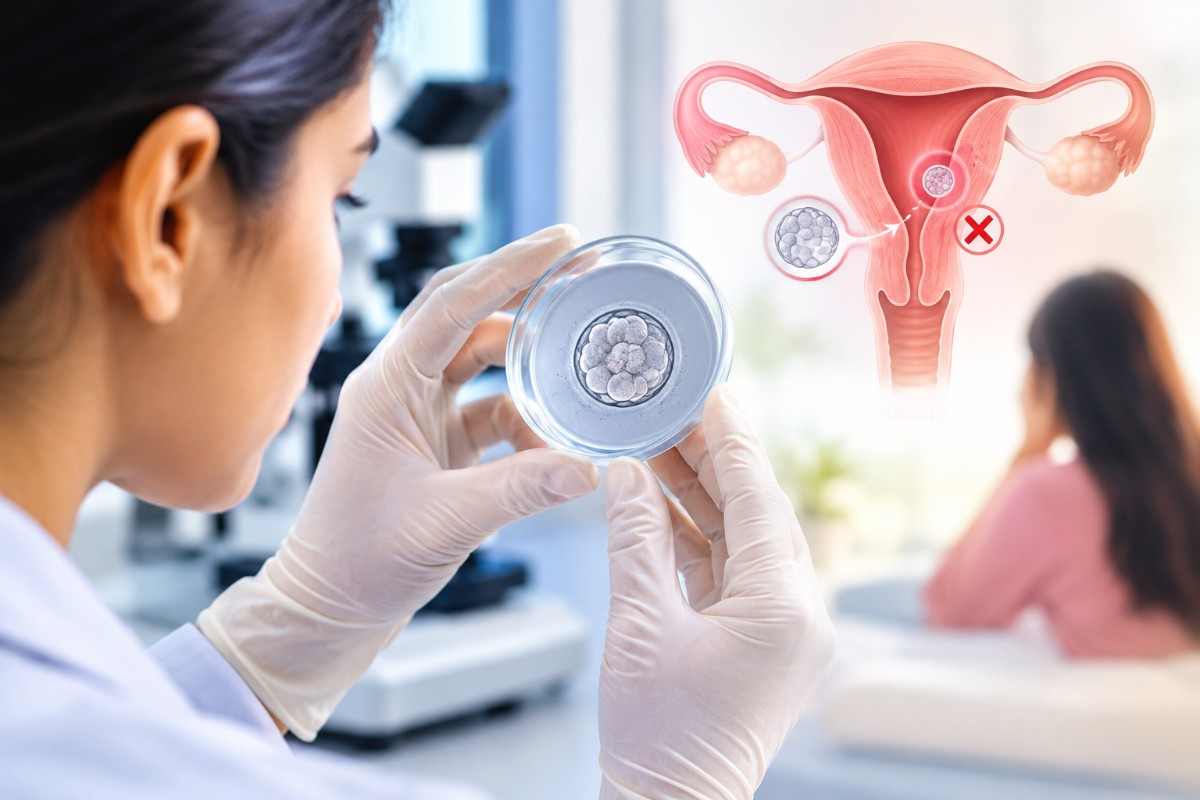
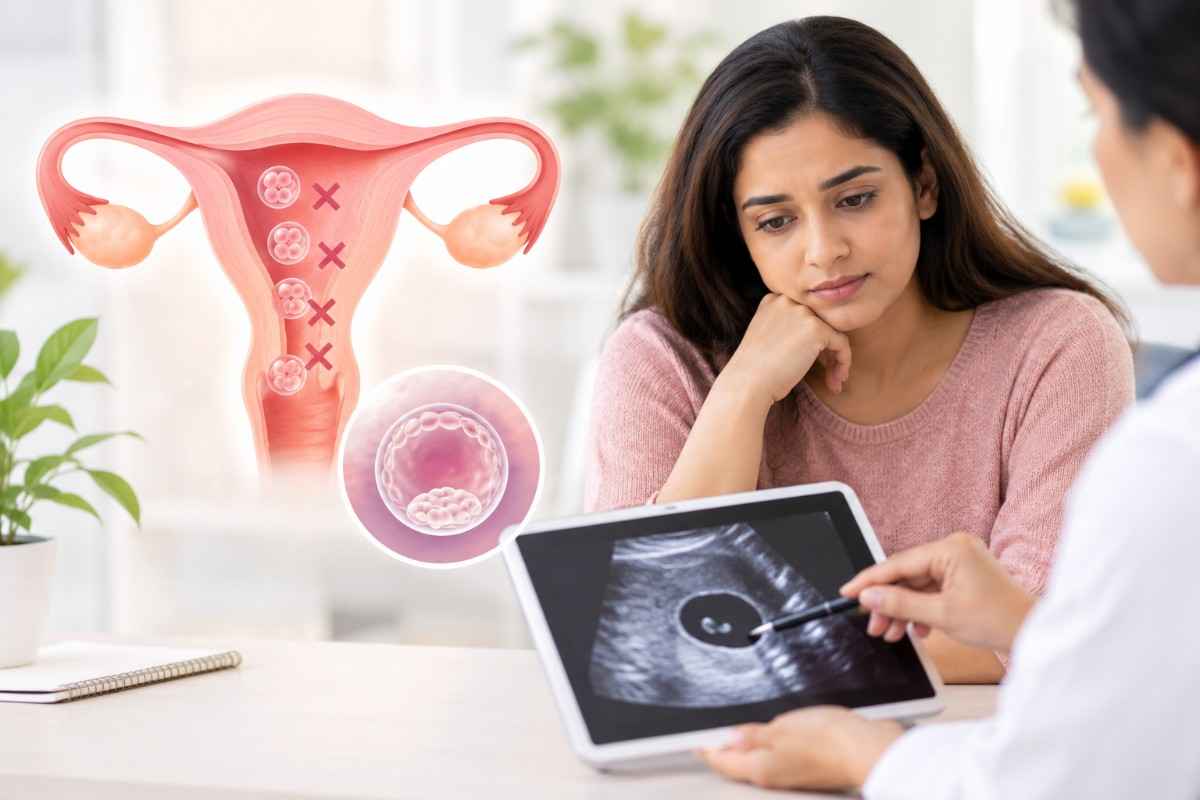
For many couples undergoing IVF, seeing a positive pregnancy test is the goal they have been waiting and hoping for. But sometimes, even after transferring good-quality embryos, pregnancy does not occur. When implantation repeatedly fails despite appropriate IVF treatment, it may be described as Recurrent Implantation Failure (RIF).
RIF can be emotionally difficult, especially when couples have already gone through multiple fertility treatments. However, repeated implantation failure does not necessarily mean that pregnancy is impossible. Identifying possible contributing factors and evaluating both partners carefully can help doctors decide whether any changes to the treatment plan may be beneficial.
What Is Recurrent Implantation Failure?
Recurrent Implantation Failure refers to repeated failure of an embryo to implant in the uterus following IVF or embryo transfer.
There is no single universally accepted definition of RIF. Doctors may consider factors such as the woman's age, number of embryo transfers, embryo quality, embryo developmental stage and the number of embryos transferred.
It is important to understand that one unsuccessful embryo transfer does not automatically mean recurrent implantation failure. IVF outcomes can be influenced by several factors, and implantation may not occur even when treatment appears to have gone well.
Why Does Embryo Implantation Fail?
Successful implantation is a complex process that requires the embryo, uterus and hormonal environment to work together. Several factors can potentially contribute to implantation failure.
1. Embryo-Related Factors
Embryo quality is an important consideration. Even an embryo that looks healthy under a microscope can sometimes have chromosomal abnormalities that cannot be identified through appearance alone.
As women age, the likelihood of chromosomal abnormalities in eggs and embryos generally increases. This can affect embryo development, implantation and early pregnancy.
Depending on the individual situation, doctors may discuss options such as blastocyst culture or preimplantation genetic testing (PGT).
2. Uterine and Endometrial Factors
The uterus needs to provide a suitable environment for embryo implantation.
Conditions such as:
- Uterine fibroids
- Endometrial polyps
- Adenomyosis
- Endometriosis
- Uterine adhesions
- Certain congenital uterine abnormalities
may sometimes affect implantation or pregnancy outcomes.
The thickness and development of the endometrium are also considered during an IVF cycle. However, endometrial thickness is only one part of the overall assessment and should not be interpreted in isolation.
3. Timing of Embryo Transfer
Implantation depends on synchronisation between the developing embryo and the endometrium.
Hormonal changes during the IVF cycle help prepare the uterine lining for implantation. If the embryo and endometrium are not appropriately synchronised, implantation may be affected.
In selected cases, doctors may consider tests designed to evaluate endometrial receptivity. These tests are not suitable or necessary for every patient, and their usefulness should be assessed individually.
4. Hormonal and Metabolic Factors
Certain hormonal or metabolic conditions can influence fertility and pregnancy.
Thyroid disorders, poorly controlled diabetes and other endocrine abnormalities may require evaluation and appropriate management.
Conditions such as PMOS, depending on the individual's symptoms and reproductive history, may also require personalised treatment before or during fertility treatment.
5. Sperm-Related Factors
Implantation is not only related to the woman's reproductive system. Sperm contributes half of the genetic material to an embryo.
Although routine semen analysis provides important information, additional sperm-related factors may sometimes need consideration, particularly when there is a history of repeated IVF failure or poor embryo development.
A fertility specialist may recommend further male-factor evaluation based on the couple's history.
How Is Recurrent Implantation Failure Evaluated?
There is no single test that can identify the cause of every implantation failure. Evaluation should be personalised rather than based on a long list of tests performed routinely.
Depending on the individual's history, a fertility specialist may review:
- Previous IVF and embryo-transfer records
- Embryo quality and development
- Maternal age
- Uterine anatomy
- Endometrial development
- Hormonal and metabolic health
- Sperm parameters
- Previous pregnancy history
- Genetic or chromosomal considerations
Ultrasound may be used to assess the uterus and ovaries. In selected cases, hysteroscopy or other imaging procedures may be recommended when a uterine abnormality is suspected.
If clinically indicated, doctors may also discuss genetic testing or other specialised investigations.
Can Recurrent Implantation Failure Be Treated?
Treatment depends entirely on the suspected cause.
If a uterine polyp, fibroid, adhesion or other structural abnormality is identified, treating the condition may be considered before another embryo transfer.
If hormonal or metabolic problems are identified, appropriate medical management may be recommended.
Where embryo-related factors are suspected, the fertility team may review the stimulation protocol, laboratory approach, embryo culture strategy or whether genetic testing is appropriate.
In some patients, changing the embryo-transfer protocol or preparing the endometrium differently may be considered.
It is important to remember that there is no single treatment that guarantees implantation. Treatments should be recommended based on evidence, medical history and individual clinical findings.
What About Immune Testing and Add-On Treatments?
Couples experiencing repeated IVF failure often come across treatments involving immune testing, specialised medications or IVF "add-ons."
Some of these approaches are still being studied, and evidence for routine use may be limited or inconsistent.
Patients should discuss the potential benefits, risks, costs and supporting evidence with their fertility specialist before adding any treatment to an IVF cycle.
More testing is not always better. A focused evaluation based on the individual's history can help avoid unnecessary procedures and expenses.
Can Lifestyle Changes Improve Fertility?
Lifestyle cannot correct every cause of implantation failure, but maintaining overall health can support reproductive wellbeing.
Helpful measures may include:
- Maintaining a healthy weight
- Eating a balanced and nutritious diet
- Staying physically active as advised by your doctor
- Avoiding smoking and recreational drugs
- Limiting alcohol
- Getting adequate sleep
- Managing chronic health conditions
- Taking prescribed medications and supplements correctly
Both partners should be included in the fertility journey because reproductive outcomes involve contributions from both the egg and sperm.
When Should You Consult a Fertility Specialist?
If you have experienced repeated unsuccessful embryo transfers, it is reasonable to discuss your treatment history with a fertility specialist before proceeding with another cycle.
Rather than simply repeating the same treatment, your doctor can review previous cycles and determine whether there are identifiable factors that should be addressed.
A detailed review of your embryo quality, uterus, endometrium, hormones, sperm factors and previous IVF history can help guide the next steps.
Take-Home Message
Recurrent Implantation Failure can be frustrating and emotionally challenging, but repeated implantation failure does not mean that you cannot become pregnant.
The reasons can vary considerably between couples. Sometimes an identifiable issue can be treated; in other situations, no single cause can be found.
The most important step is to avoid assuming that one particular test or treatment will solve the problem. A personalised evaluation by an experienced fertility specialist can help determine which investigations and treatment options are appropriate for your situation.
If you have experienced repeated IVF implantation failure, speak with your fertility specialist before starting another cycle. Understanding what happened in previous attempts can be an important part of planning the next step.