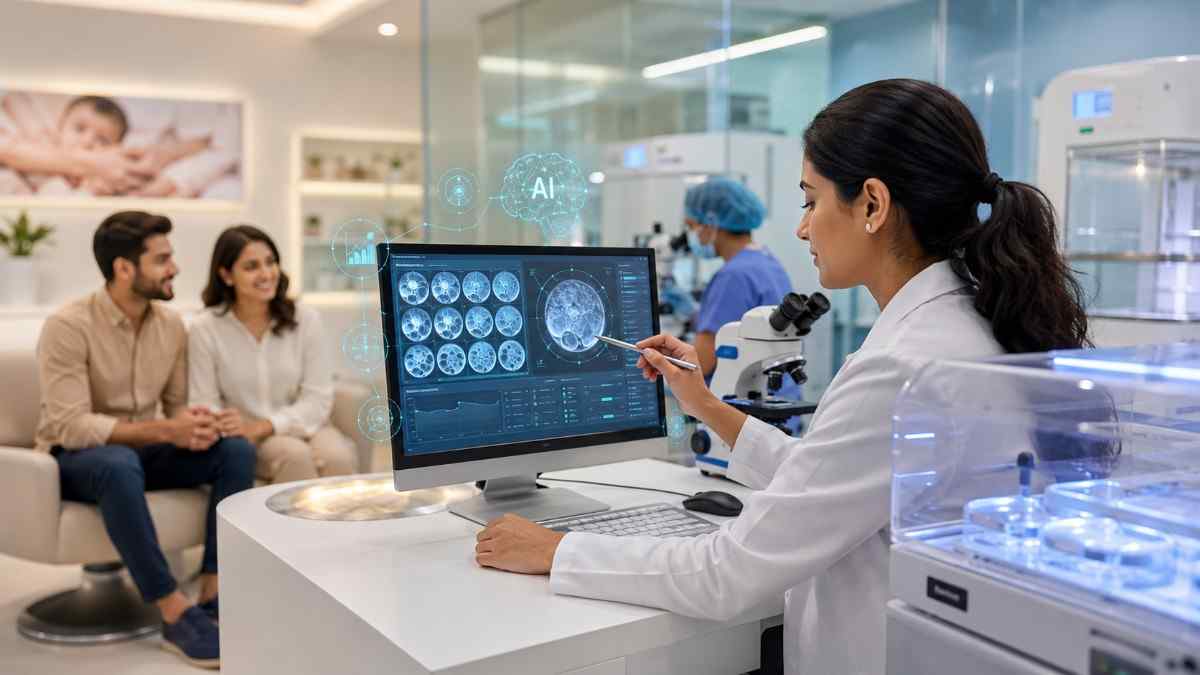

Infertility is becoming increasingly common among couples worldwide, but advancements in reproductive medicine are offering new hope every day. One of the most exciting innovations in fertility treatment is Artificial Intelligence (AI) in IVF. AI-powered IVF is transforming the way fertility specialists analyze embryos, personalize treatment plans, and improve pregnancy success rates.
For couples dreaming of parenthood, understanding how AI works in fertility treatments can help them make informed decisions and feel more confident during their IVF journey.
What Is AI-Powered IVF?
Artificial Intelligence in IVF refers to the use of advanced computer algorithms and machine learning technologies to assist fertility specialists in making more accurate decisions during the IVF process.
Traditionally, embryologists manually examined embryos under microscopes to determine which embryos had the best chance of implantation. While highly skilled specialists still play a vital role, AI now adds another layer of precision by analyzing thousands of data points that the human eye may miss.
AI systems can evaluate:
- Embryo Quality
- Egg and Sperm Health
- Embryo Development Patterns
- Implantation Potential
- Optimal timing for Embryo Transfer
- Chances of Successful Pregnancy
By combining medical expertise with intelligent data analysis, AI-powered IVF helps improve treatment outcomes and reduce uncertainty.
How AI Is Used During IVF Treatment
1. AI-Based Embryo Selection
One of the most important steps in IVF is selecting the healthiest embryo for transfer. AI technology uses time-lapse imaging and predictive analytics to monitor embryo development continuously.
Instead of checking embryos only a few times a day, AI systems analyze their growth patterns 24/7. The software compares embryo development with thousands of successful IVF cases and identifies embryos with the highest implantation potential.
This improves:
- Embryo Selection Accuracy
- Implantation Success Rates
- Pregnancy Outcomes
- Chances of Healthy Live Birth
Choosing the best embryo can also reduce the need for multiple IVF cycles.
2. Improved Fertility Diagnosis
AI tools can help fertility specialists identify underlying fertility issues more quickly and accurately.
By analyzing medical history, hormone levels, ultrasound scans, and previous treatment data, AI can detect patterns linked to:
- PCOS
- Endometriosis
- Ovulation Disorders
- Male Infertility
- Poor Ovarian Reserve
This allows doctors to create more personalized treatment strategies for each patient.
3. Personalized IVF Treatment Plans
Every couple’s fertility journey is unique. AI helps doctors customize IVF protocols based on individual factors such as:
- Age
- Hormone Levels
- Ovarian Response
- Egg Quality
- Previous IVF Outcomes
- Lifestyle Factors
Personalized treatment plans can improve ovarian stimulation, reduce medication-related risks, and increase the chances of successful fertilization and implantation.
4. Better Timing for Embryo Transfer
The timing of embryo transfer is critical for IVF success. AI-powered systems can help determine the most suitable implantation window by analyzing hormonal patterns and uterine conditions.
This ensures that the embryo is transferred when the uterus is most receptive, improving the likelihood of pregnancy.
5. Reducing Human Error
Even experienced embryologists can face challenges when assessing embryo quality manually. AI brings greater consistency and objectivity to the IVF process.
By using data-driven analysis, AI reduces subjective variations and supports fertility specialists in making more reliable decisions.
However, AI does not replace doctors or embryologists. Instead, it acts as a powerful support tool that enhances clinical expertise.
Benefits of AI-Powered IVF
Higher Pregnancy Success Rates
AI improves embryo selection and treatment accuracy, increasing the chances of implantation and pregnancy.
Fewer Failed IVF Cycles
Better decision-making helps reduce unsuccessful embryo transfers and repeated IVF attempts.
Reduced Emotional Stress
Multiple failed cycles can be emotionally exhausting. AI-supported IVF may help couples achieve success faster, reducing stress and anxiety.
Lower Risk of Multiple Pregnancies
With more accurate embryo selection, doctors can confidently transfer a single high-quality embryo, reducing the risk of twins or higher-order pregnancies.
Enhanced Efficiency in Fertility Labs
AI systems streamline embryo monitoring and analysis, improving workflow and consistency in IVF laboratories.
Time-Lapse Imaging and AI in IVF
Time-lapse imaging is one of the most significant technological advancements used alongside AI in fertility treatments.
Special incubators equipped with cameras capture continuous images of embryo development without disturbing the embryos. AI software then evaluates these images and identifies subtle developmental markers associated with successful implantation.
Benefits of time-lapse imaging include:
- Continuous Embryo Monitoring
- Stable Embryo Culture Environment
- Improved Embryo Grading
- Better Embryo Selection Accuracy
This technology provides fertility specialists with valuable insights that can improve IVF outcomes.
Can AI Guarantee Pregnancy Success?
While AI significantly improves IVF precision and decision-making, no fertility treatment can guarantee pregnancy.
Success still depends on several factors, including:
- Age of the woman
- Egg and Sperm Quality
- Uterine Health
- Lifestyle Habits
- Underlying Medical Conditions
However, AI-powered IVF helps maximize the chances of success by making the process more accurate, personalized, and efficient.
Is AI-Powered IVF Safe?
Yes, AI-assisted IVF is considered safe when used by qualified fertility specialists and experienced embryology teams.
AI technologies are designed to support medical professionals, not replace them. Fertility experts still make the final clinical decisions based on AI-generated insights and patient-specific factors.
Many leading fertility centres around the world are now integrating AI into their IVF laboratories to enhance treatment quality and patient outcomes.
Who Can Benefit from AI-Powered IVF?
AI-assisted fertility treatment may be especially beneficial for:
- Couples with repeated IVF failure
- Women above 35 years of age
- Patients with unexplained infertility
- Couples seeking advanced fertility care
- Patients with poor embryo quality
- Individuals wanting personalized IVF treatment
Discussing AI-based fertility options with a fertility specialist can help determine whether it is suitable for your specific situation.
The Future of Fertility Treatment
Artificial Intelligence is shaping the future of reproductive medicine. As technology continues to evolve, AI is expected to further improve:
- Embryo Selection Accuracy
- Fertility Predictions
- Genetic Screening
- Personalized Medicine
- IVF Success Rates
The integration of AI into fertility care represents a major step forward in helping more couples achieve their dream of parenthood.
Conclusion
AI-powered IVF is revolutionizing fertility treatment by combining medical expertise with advanced data analysis and intelligent embryo assessment. From improved embryo selection to personalized treatment planning, AI helps fertility specialists make more informed decisions that can increase the chances of pregnancy.
Although AI cannot guarantee success, it offers couples greater hope, precision, and confidence throughout their fertility journey. With continuous advancements in reproductive technology, AI-assisted IVF is becoming an important part of modern fertility care and improving outcomes for aspiring parents worldwide.