For many, the journey to parenthood isn’t a straight line; it’s a winding road of hope, science, and sometimes, profound heartbreak. In the world of In Vitro Fertilization (IVF), the stakes are emotionally and financially massive. For decades, the "gold standard" of choosing which embryo to transfer back to the womb relied almost entirely on the human eye. But even the most experienced embryologists have limits.
Today, we are witnessing a quiet revolution in the lab. Artificial Intelligence (AI) is no longer a futuristic concept it is becoming a vital partner in the quest to help families grow, offering a "smarter" path to parenthood by seeing what humans simply cannot.
The Challenge: The "Beauty Contest" of Embryology
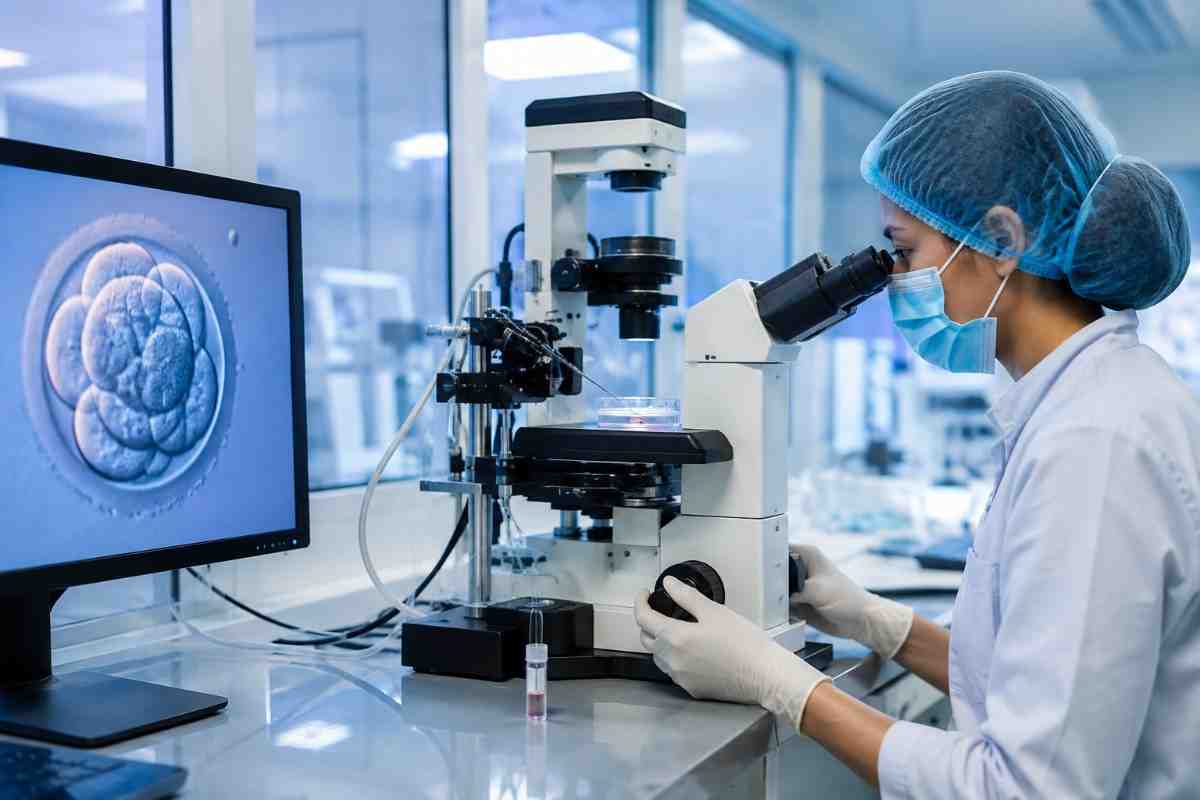
In a traditional IVF setting, embryologists grade embryos based on their appearance their shape, the number of cells, and how symmetrical they look. It’s a bit like a high-stakes beauty contest. However, looks can be deceiving. A "perfect-looking" embryo might have chromosomal abnormalities, while one that looks slightly "average" might be perfectly healthy.
The traditional method morphological grading is subjective. If you show the same embryo to three different experts, you might get three different opinions. This inconsistency, combined with the invasive nature of PGT-A (Preimplantation Genetic Testing for Aneuploidies), which requires biopsying a few cells from the embryo, created a need for a more precise, non-invasive solution.
Enter AI: The New Lens of Science
AI changes the game by moving from subjective "glances" to objective "data analysis." By using Computer Vision and Deep Learning, AI systems can analyze thousands of time-lapse images of a developing embryo.
- Pattern Recognition: AI can detect subtle "milestones" in development like the exact micro-second a cell divides that are invisible to the naked eye.
- Predictive Analytics: By comparing a patient's embryo against a massive global database of successful pregnancies, the AI can assign a "score" to each embryo, indicating its likelihood of implantation.
Why AI is a "Smarter" Path
- Increased Success Rates, Faster: The goal of IVF is a healthy baby, ideally on the first try. AI helps prioritize the embryos with the highest biological potential, which can significantly reduce the number of cycles a person needs to undergo.
- Reducing Human Bias: Humans have "off days." AI does not. It provides a consistent, standardized evaluation every single time, ensuring that the selection process is based purely on biological data.
- Non-Invasive Insights: While genetic testing (PGT-A) is common, it involves taking a physical sample from the embryo. AI can often predict chromosomal health just by "looking" at the way the embryo grows, offering a risk-free layer of screening.
- Lowering the Emotional Burden: Every failed IVF cycle takes a toll on mental health. By improving the chances of success per transfer, AI helps shorten the "time to pregnancy," sparing parents months of elective grief.
The Ethics of the "AI Baby"
It’s important to clarify what AI isn’t doing. We aren't talking about "designer babies" or choosing eye color. AI in this context is strictly a tool for viability. It’s about identifying which embryo has the best chance of becoming a healthy pregnancy.
However, the integration of AI does bring up valid questions. Who owns the data? How do we ensure these algorithms are trained on diverse populations so they work for everyone? The medical community is currently working hand-in-hand with tech developers to ensure that "Smarter Parenthood" remains ethical, transparent, and patient-centered.
The Future of Fertility
We are moving toward a world where "personalized fertility" is the norm. In the near future, AI won't just look at the embryo; it will look at the mother’s uterine environment, her hormone levels, and the embryo’s data to find the "Perfect Match" for a transfer.
For the thousands of people currently navigating the complexities of infertility, AI represents more than just software. It represents a bridge between a dream and a reality a way to tilt the scales of science in favor of life.