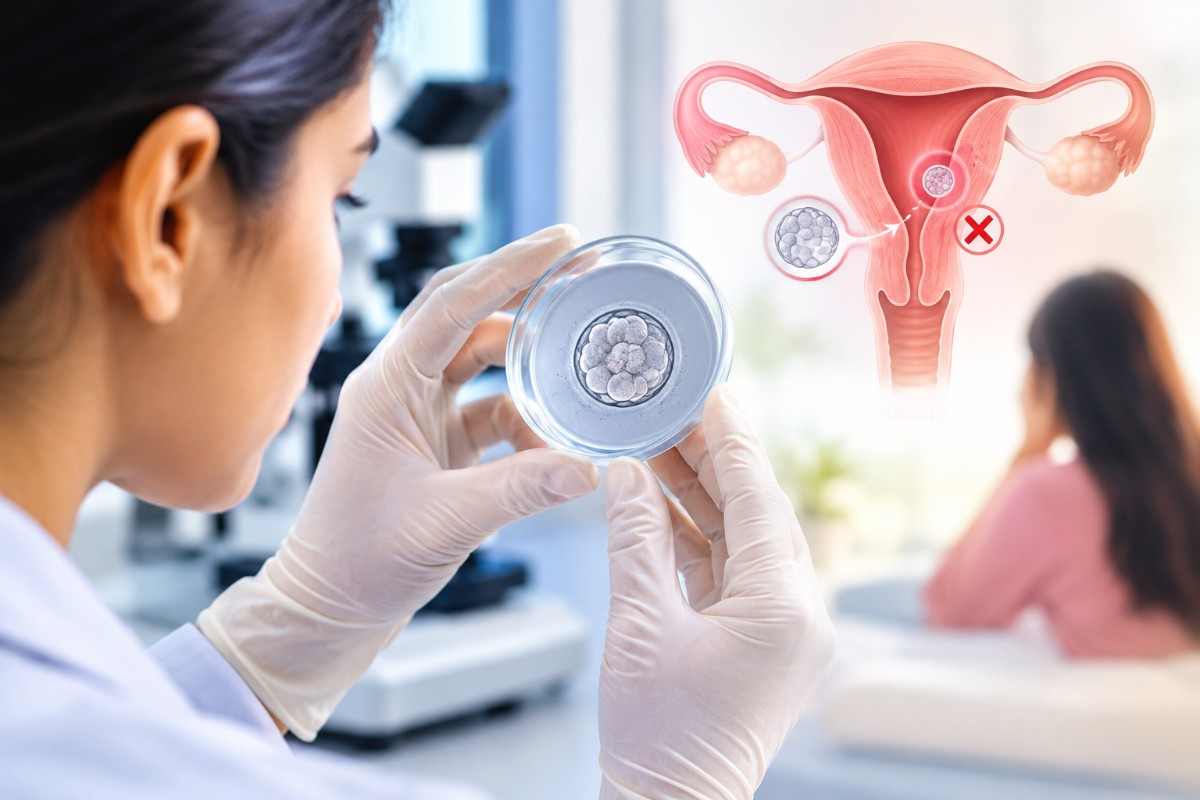

What Is Male Infertility?
Male infertility refers to a man’s reduced ability to cause pregnancy in a fertile female partner. It is commonly due to issues with sperm production, quality, or function. In this condition, males are not usually accompanied by symptoms. Therefore, seeking medical care is important.,Male infertility may result from a number of reasons, such as:,Poor sperm motility,Low sperm count or none at all (azoospermia),Sperm morphology (shape) abnormalities,Hormonal imbalances, such as low testosterone; varicocele (enlarged veins in the scrotum),Reproductive tract infections,Genetic disorders,Lifestyle factors such as, alcohol consumption, smoking, obesity, stress, and exposure to heat or toxins
How Is Male Infertility Diagnosed?
Diagnosing male infertility usually includes a series of examinations and tests.,It begins with a general physical examination and a review of medical history. The doctor examines the genital area and asks about inherited conditions, long-term health issues, past illnesses, injuries, or surgeries that may affect fertility.,One of the most important tests is a semen analysis.,Samples of semen can be obtained in a variety of methods. The majority of males give samples at the clinic by masturbating into a sterile container. In a lab, the sample is analysed to determine the sperm count, shape (morphology), and motility, as well as to look for infections or other anomalies.,Semen analysis is typically repeated multiple times throughout time to ensure reliable results because sperm counts can differ across samples. Before moving on with additional male fertility testing, the doctor may recommend a thorough assessment of the female spouse if the findings of the semen test are normal.,To determine the underlying reason for infertility, more testing can be recommended.
Additional Diagnostic Tests
A scrotal ultrasound- This employs sound waves to identify disorders like varicocele or other problems in the testicles and surrounding structures. During a transrectal ultrasonography, a tiny probe is inserted into the rectum to evaluate the prostate and look for obstructions in the ducts that deliver semen.,Hormone testing - Testosterone and other hormones that are essential for sperm production and sexual development can be measured by hormone testing using blood samples.,Post-ejaculation urine test- Retrograde ejaculation, in which sperm goes backward into the bladder rather than out through the penis, can be detected by a post-ejaculation urine test.,Genetic testing - When the sperm count is extremely low, genetic testing could be advised since genetic disorders, including Y chromosome alterations, might impact fertility.,To evaluate sperm production and ascertain whether infertility is caused by a blockage or transport problem, a testicular biopsy, which entails removing a small tissue sample from the testicle, may be carried out.,In some cases, specialized sperm function tests are used to evaluate sperm survival, their ability to penetrate and attach to an egg. However, these tests are not commonly performed and usually do not alter treatment decisions.
Treatment Plan for Male Infertility
Male infertility treatments include:
,Surgery: For instance, an obstructed vas deferens can often be fixed surgically, as can a varicocele. It is possible to undo previous vasectomies. Sperm can often be extracted straight from the testicles or epididymis using sperm retrieval procedures in situations where there are no sperm present in the ejaculate.,Treating infections: While antibiotics can treat reproductive tract infections, they don't always increase fertility.,Treatments for issues related to sexual activity: For conditions like erectile dysfunction or premature ejaculation, medication or counselling can help increase fertility.,Hormone therapies and medications: If infertility is brought on by high or low levels of specific hormones or issues with how the body uses hormones, your doctor may suggest hormone replacement therapy or medication.,Assisted reproductive technology (ART): Depending on your unique situation and preferences, ART treatments may involve getting sperm through surgical extraction, regular ejaculation, or donor persons. After that, the sperm are either used for intracytoplasmic sperm injection or in vitro fertilisation, or they are placed into the female vaginal tract.Conclusion
Male infertility is treatable in many cases. With early diagnosis, personalised treatment plans, and advanced fertility techniques, many couples successfully achieve parenthood. If you are struggling to conceive, consult a fertility specialist at Vriksh Fertility and take the first step towards understanding your options.